What Your Live Dealer Is Actually Telling You: A Science-Backed Guide for American Players on Southeast Asian Tables
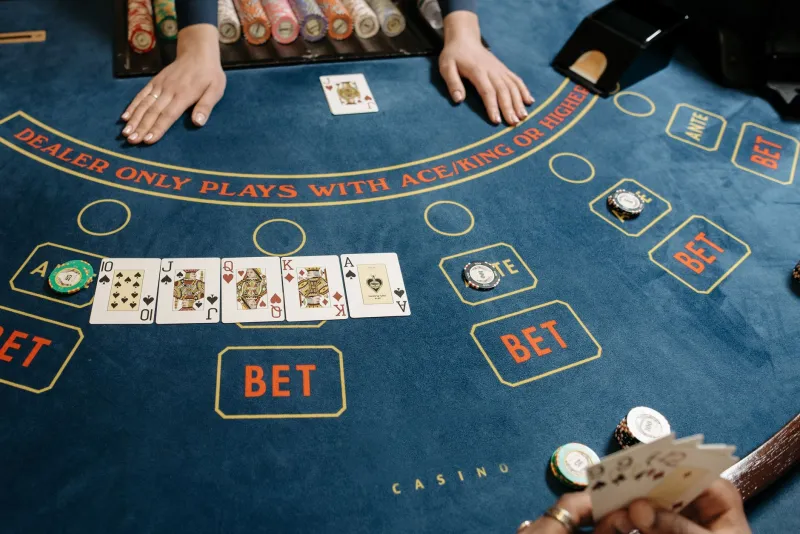
Here's something most American gamblers never think about: the person dealing your cards on a Southeast Asian live platform isn't just running a game. They're a trained professional operating inside a cultural framework that shapes everything — how they move, how they respond, how they manage pressure. And if you know how to read that framework, you've got an edge that no algorithm can replicate.
This isn't about cheating. It's about behavioral literacy. And on platforms like CasinVietnam, where real human dealers anchor every live table session, that literacy can quietly shift your results.
Why Southeast Asian Live Dealers Are a Different Animal
Let's start with context. American casino culture trains dealers to be neutral to the point of robotic. Vegas floor managers actively coach dealers to suppress reactions, maintain flat affect, and avoid any behavior that could be interpreted as signaling. The goal is mechanical consistency.
Southeast Asian live dealer culture runs on a different set of norms. Hospitality is baked into the professional identity. Dealers on Vietnamese platforms are often trained to be warm, engaging, and present — not cold and transactional. That's genuinely good for the player experience, but it also means there's more behavioral data flowing across the screen than most American players realize.
When a dealer is engaged, relaxed, or subtly uncomfortable, it shows. And that information matters.
The Science of Micro-Expressions in Real-Time Play
Psychologist Paul Ekman's research on micro-expressions — those involuntary, sub-second facial movements that leak genuine emotion before conscious control kicks in — is well established in fields like law enforcement and negotiation. What's less discussed is how it applies to live gaming.
Micro-expressions aren't about catching a dealer in a lie. They're about reading the emotional temperature of the table. A dealer who's been running a cold shoe for forty minutes carries that in their face differently than one who just watched five consecutive players bust. These aren't deceptive signals — they're human ones. And they give you real-time information about the rhythm and energy of the session.
On Southeast Asian platforms, where dealers tend to be more expressively present than their Western counterparts, the signal-to-noise ratio is actually higher. You're working with more behavioral data, not less.
What to watch for:
- Microlifts at the corners of the mouth — often appear when a dealer draws a strong hand, even before the reveal
- Eyebrow compression — a subtle sign of concentration or mild stress, sometimes visible during complex shoe sequences
- Gaze duration — how long a dealer holds eye contact (even through a camera) can indicate confidence or hesitation in a hand sequence
None of these are guarantees. But they're inputs, and smart players aggregate inputs.
Hand Movements Tell a Different Story
Facial cues get all the attention, but experienced players know the hands are often more honest. Dealers on live Southeast Asian platforms follow specific procedural choreography — shuffle protocols, card placement rhythms, chip handling sequences. When those rhythms break, something's different.
A dealer who normally moves with fluid efficiency and suddenly slows during a deal isn't necessarily doing anything wrong. But that hesitation is a data point. Conversely, a dealer who accelerates through a sequence — moving faster than their baseline — is also signaling something about their internal state.
This is why establishing a dealer's baseline matters so much in the first five to ten minutes of a session. Don't just watch the cards. Watch the hands. Build your mental model of how this specific person moves at rest, and then track deviations.
On CasinVietnam's live tables, the camera angles are typically high quality and multi-perspective, which makes this kind of observation genuinely practical. Use it.
The Dealer-Player Dynamic: It's Not Neutral
Here's something American players raised on Vegas logic often get wrong: the dealer isn't your opponent. On Southeast Asian platforms especially, the cultural dynamic leans toward a collaborative performance. The dealer wants the table to be energetic and fun. They respond to player behavior in ways that Western casino culture actively suppresses.
What that means practically is that how you play affects how the dealer plays. A player who's engaged, who responds to the dealer's energy, who creates a conversational dynamic through the chat function — that player gets a different quality of dealer presence than one who's silent and mechanical.
This isn't manipulation. It's social intelligence. An engaged dealer is a more readable dealer. And a more readable dealer gives you more to work with.
Try opening with a simple greeting in the chat. Respond to dealer comments. Acknowledge good runs on both sides. You're not trying to distract — you're trying to establish a human connection that opens up the behavioral channel.
Betting Pattern Psychology: Reading the Table, Not Just the Dealer
Live tables on Southeast Asian platforms frequently carry multiple players from different time zones and cultural backgrounds. That multi-player dynamic creates its own behavioral layer worth reading.
Watch how other players bet in relation to dealer behavior. When a table full of experienced Southeast Asian players suddenly tightens their bets — pulling back to minimums after a string of aggressive play — that's worth noting. These players often have more intuitive familiarity with the platform rhythms and dealer patterns than a US-based newcomer.
You don't have to follow the crowd, but you should register the crowd as data. A collective behavioral shift at a live table is rarely random.
Practical Application: Building Your Live Session Checklist
Pulling this together into something actionable:
- Spend the first 5-10 minutes observing, not betting aggressively. Establish your dealer's baseline movement and expression patterns.
- Watch the hands more than the face. Hand rhythm deviations are subtler and often more reliable than facial cues.
- Engage the dealer through chat. A socially active session gives you more behavioral signal to read.
- Track multi-player betting shifts. When experienced players collectively change their approach, treat it as a soft signal worth factoring in.
- Adjust your expectations by session length. Dealer energy and behavioral signal quality often shift after the 30-minute mark as fatigue becomes a minor factor.
The Bigger Picture
None of this replaces solid strategy, bankroll discipline, or understanding the mathematical structure of the games you're playing. But behavioral literacy is a real edge — one that American players are leaving completely untapped because they've been trained to treat live dealers as fancy software.
On Southeast Asian platforms like CasinVietnam, the human element is front and center by design. The question is whether you're actually using it.
Start paying attention. The table's been talking this whole time.