Patience, Pressure, and the Mekong Mindset: How Vietnamese Poker Tactics Are Shaking Up American Tournaments
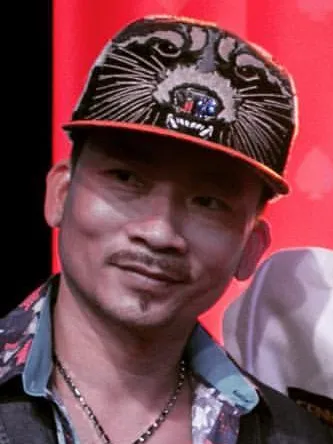
Photo: Dutch Boyd from Las Vegas, NV, USA, CC BY 2.0, via Wikimedia Commons
Walk into any major poker room in Las Vegas or Atlantic City these days and you might notice something different. The loudest, flashiest players — the ones who used to dominate the conversation — aren't necessarily the ones stacking chips at the end of the night. A quieter, more deliberate style of play has been creeping into the American tournament scene, and a growing number of coaches and players are tracing its roots straight back to Vietnamese gaming culture.
It's not a fad. It's a full-on strategic shift, and it's worth understanding where it came from.
The Vietnamese Poker Tradition Nobody Talks About
Poker in Vietnam has a long, layered history. Long before online platforms made the game globally accessible, Vietnamese players were gathering in informal settings — tea houses, backrooms, social clubs — where the game was less about aggression and more about reading the room. The cultural environment shaped a style of play built on observation, restraint, and the kind of psychological patience that most American players simply aren't trained for.
"In a lot of American poker culture, there's this pressure to be active, to be seen making moves," says Marcus Tran, a Houston-based poker coach who grew up watching his father play in Vietnamese community card games. "Vietnamese players, especially older ones, they don't feel that pressure. They're comfortable doing absolutely nothing for long stretches — and then striking at exactly the right moment."
That comfort with inaction turns out to be a massive strategic weapon.
What 'Slow Patience' Actually Looks Like at the Table
American players often talk about patience as a virtue, but Vietnamese-influenced strategy takes it further — into what some coaches are calling "slow patience," a deliberate approach where the goal isn't just to wait for good cards but to actively manipulate the tempo of the game through inaction.
The idea is straightforward but psychologically demanding. By consistently opting out of marginal situations, a player forces opponents to fill the silence with assumptions. Those assumptions become tells. And those tells become exploitable patterns.
Jennifer Dao, a tournament player from San Jose who recently cashed in three consecutive World Series of Poker events, credits this mindset shift for her improvement. "I used to play a very textbook American style — aggressive, position-focused, pretty standard GTO stuff. My coach introduced me to the concept of what he calls 'strategic invisibility.' You make yourself unreadable not by doing complicated things, but by doing almost nothing until the moment is perfect."
Dao says the adjustment was uncomfortable at first. "American poker culture rewards action. You feel like you're falling behind if you're not in hands. Unlearning that instinct took months."
The Psychology of Face and Its Poker Applications
Another dimension that Vietnamese poker philosophy brings to the table — literally — is rooted in the cultural concept of "saving face." In Vietnamese social contexts, public embarrassment carries serious weight. Vietnamese players, even in competitive card games, tend to be acutely sensitive to the social dynamics unfolding around them.
At the poker table, this translates into an almost clinical ability to detect when an opponent is bluffing out of ego rather than strategy. "When someone is bluffing to save face — because they've been caught making a mistake and they're trying to recover their image — that's a very specific energy," says Tran. "Vietnamese players are culturally trained to recognize that energy. It's second nature."
American pros who've started incorporating this lens into their game describe it as adding a social intelligence layer on top of their existing technical skills. It's not replacing math-based strategy — it's complementing it with something harder to quantify but equally powerful.
Tournament Results Are Starting to Reflect the Shift
The anecdotal evidence is stacking up. Several American players who've worked with Vietnamese coaches or spent time studying in Southeast Asian gaming communities have posted notable results over the past two years. While it's impossible to isolate any single variable in poker success, the pattern is hard to ignore.
Coach Tran has seen his client roster double in the past eighteen months, with players reaching out specifically because they've heard about the Eastern-influenced approach. "I had a guy fly in from Chicago last spring. He said he'd plateaued for three years and needed something different. We worked on tempo control and opponent profiling — heavy Vietnamese influences — and he final-tabled a major event six months later."
For the broader American poker community, this represents a meaningful evolution. The game has always borrowed and adapted, pulling in influences from different cultures and eras. The current Vietnamese wave feels less like a trend and more like a genuine philosophical contribution.
What This Means for Everyday Players
You don't need to be a tournament grinder to benefit from this mindset. Whether you're playing cash games online at CasinVietnam or sitting down at a home game on a Friday night, the core principles translate directly.
Start by getting comfortable with folding. Not reluctant folding — confident folding. The Vietnamese approach treats a well-timed fold as an active, powerful decision rather than a passive retreat. Second, practice watching rather than playing. When you're out of a hand, study your opponents with genuine curiosity. What stories are they telling with their timing, their posture, their betting patterns?
Finally, resist the American impulse to perform. Poker isn't theater — at least not the kind where you're the star of every scene. Sometimes the most powerful move is to disappear into the background and let your opponents make mistakes in the silence you create.
The dragon doesn't announce itself. It waits. And when it moves, the hand is already won.