Rewired by the Mekong: How Living in Vietnam Permanently Alters the Way Expats Gamble
Somewhere between your third bowl of bún bò Huế and your sixth month navigating Hanoi's chaotic roundabouts, something shifts. It's subtle at first — a slower heartbeat at the table, a sharper read on the room, a gut instinct that wasn't there before. Ask any American expat who's been living in Vietnam long enough, and they'll describe the same thing: the country gets inside your head, and it changes how you play.
This isn't mysticism. It's neuroscience wrapped in fish sauce and neon light.
The Biological Reset Nobody Talks About
Most American gamblers treat their body clock like a minor inconvenience. They stay up late in Vegas, crash through the next day, and call it a wash. But expats living in Vietnam don't have that luxury — and ironically, that constraint becomes a competitive advantage.
Vietnam operates on Indochina Time, seven hours ahead of Pacific Standard and twelve ahead of the East Coast. Within the first few weeks, your cortisol rhythms, melatonin cycles, and alertness windows all recalibrate. By month three, you're no longer fighting your biology to stay sharp during evening sessions — you are sharp, because your body has accepted that 9 p.m. in Ho Chi Minh City is your prime cognitive window.
Dr. Marcus Elroy, a behavioral psychologist who has studied decision fatigue among expatriate communities in Southeast Asia, puts it plainly: "When your circadian system fully adapts to a new timezone, you stop making the micro-errors that accumulate during sessions run on borrowed energy. The quality of in-session decisions improves measurably — not because the person got smarter, but because their brain stopped operating under chronic low-grade jet lag."
Stateside players logging into CasinVietnam at 11 p.m. Eastern are, biologically speaking, gambling at 6 a.m. Hanoi time. The expat sitting at the same virtual table? They're at peak alertness. That gap doesn't show up in any house edge calculation, but it shows up in the results.
When Gambling Is Everywhere, It Becomes Ordinary
In the United States, gambling carries cultural weight. It's a weekend event, a Vegas trip, a birthday treat. That framing loads every session with emotional significance — expectation, excitement, the pressure to make it count. Psychologists call this "occasion inflation," and it quietly wrecks bankroll discipline for millions of American players.
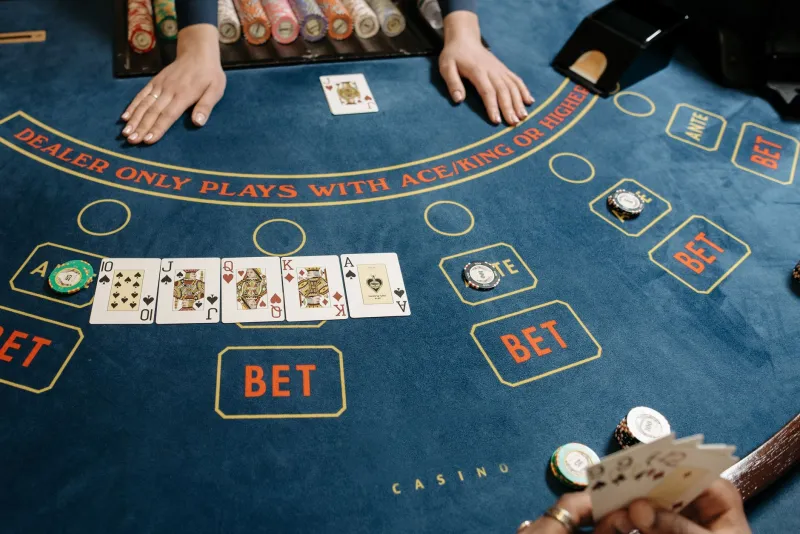
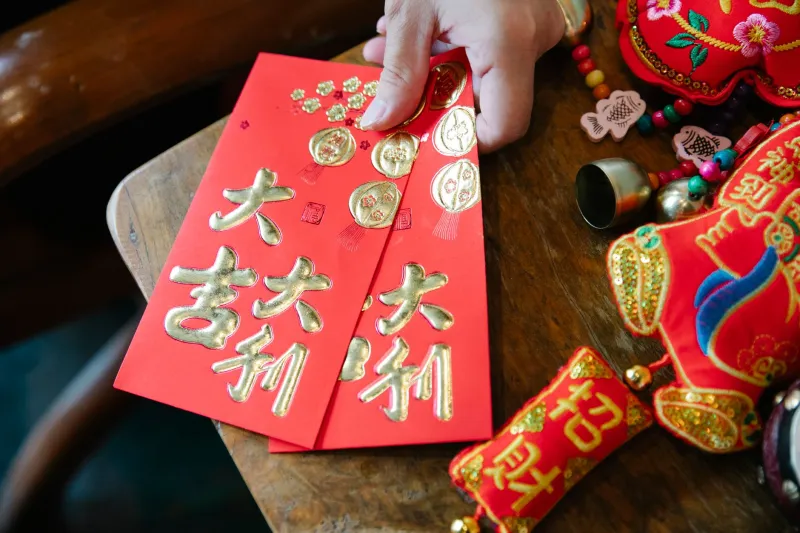
Vietnam is different. Lottery tickets are sold on every corner. Card games run in open-air cafés on Tuesday afternoons. The Tết holiday brings gambling into living rooms across the country as naturally as football enters American homes on Thanksgiving. For expats who absorb this environment, gambling gradually stops being an event and starts being a practice.
That semantic shift matters enormously. When a session at CasinVietnam is Tuesday's entertainment rather than Saturday's main attraction, the emotional static clears. You're not trying to compress a month of excitement into one night. You're just playing — and playing clean.
Amanda Tran, a marketing consultant from Austin who relocated to Da Nang four years ago, describes it this way: "Back home, I'd sit down at an online table and immediately feel this pressure to win, like I'd driven to the casino and I'd better make it worthwhile. Here, I'll play for forty-five minutes after dinner the same way I'd watch an episode of something on Netflix. The stakes feel real, but the emotional stakes are completely different. I make better decisions."
Reading the Room You've Actually Lived In
There's a specific literacy that comes from cultural immersion, and it applies directly to live dealer environments on platforms like CasinVietnam. When you've spent real time in Vietnamese culture — navigating the indirect communication styles, understanding the social weight of face-saving, recognizing the difference between a dealer who's relaxed and one who's under pressure — you pick up signals that a first-time visitor or a remote player simply cannot decode.
This isn't about stereotyping. It's about pattern recognition built through genuine exposure. An expat who's spent two years in Hội An has absorbed thousands of micro-interactions that inform how they read body language, interpret pauses, and gauge the emotional temperature of a table. That data doesn't live in a strategy guide. It lives in muscle memory.
Behavioral economist and gaming researcher Dr. Linh Phuong Nguyen, based in Saigon, has studied this phenomenon across expat communities. "Environmental immersion builds what we call 'contextual fluency," she explains. "It's not just language. It's rhythm, expectation, and social intuition. Players with high contextual fluency in a given gambling culture tend to make fewer impulsive decisions because they're not constantly processing unfamiliar inputs. Their cognitive load is lower, so their strategic capacity is higher."
The Pressure Dynamics That Rewire Risk Tolerance
Here's something nobody puts in the expat welcome packet: living in Vietnam recalibrates your relationship with uncertainty in ways that directly translate to better gambling psychology.
Navigating daily life in a country where bureaucratic rules shift, business norms differ from what you grew up with, and communication requires constant interpretation builds a specific kind of mental flexibility. You get comfortable operating in ambiguous conditions. You learn to commit to decisions without complete information, then adjust fluidly when circumstances change.
For gamblers, that's gold. The single biggest leak in most American players' games isn't strategic — it's psychological. They freeze at decision points. They second-guess reads. They chase losses because pivoting feels like failure. Expats who've spent months navigating Vietnamese daily life have been unconsciously training the exact mental muscles that prevent those leaks.
"Uncertainty tolerance is trainable," says Dr. Elroy. "And high-ambiguity environments like expat life in Southeast Asia are some of the most effective training grounds that exist. The people who thrive there tend to develop a comfort with incomplete information that serves them exceptionally well at the tables."
What Remote Players Can — and Can't — Replicate
None of this means you need to book a one-way ticket to Hanoi before your next CasinVietnam session. But it does mean that the edge expats carry is genuinely structural, not just cosmetic.
You can study Vietnamese gambling culture. You can read about Tết rituals and numerology and the significance of red at the table. You can adjust your play schedule to align with Southeast Asian peak hours. All of that helps, and CasinVietnam's content exists precisely to close that gap for stateside players.
What you can't replicate from a couch in Cincinnati is two years of environmental absorption — the circadian recalibration, the cultural fluency, the daily-life uncertainty training. Those advantages are earned through presence, not research.
The good news? Knowing they exist changes how you play. Understanding that your expat counterpart at the same table has a quieter emotional baseline, a sharper contextual read, and a more calibrated risk tolerance is itself a form of intelligence. It tells you to slow down, trust the process, and stop treating every session like it has to redeem something.
Because here at CasinVietnam, where luck meets the Orient, the players who win consistently aren't just luckier. They're wired differently — and now you know why.