Red Envelopes, Forbidden Words, and the Psychology Behind Vietnamese Casino Rituals
Walk into any Vietnamese household on the eve of Tết, and you'll find at least one family member carefully picking their outfit for the next morning. Not because they have somewhere fancy to be — but because the color they wear could determine whether the whole year goes sideways. Now imagine carrying that same intensity into an online casino session. For millions of Vietnamese players, that's not imagination. That's just Tuesday.
At CasinVietnam, we've noticed that a lot of American players who've started exploring Southeast Asian gaming platforms get genuinely curious about these rituals. Some laugh them off. Others quietly start adopting them. And a surprising number find that certain practices actually seem to work — not in a mystical sense, but in ways that behavioral science can actually back up.
So let's break it down. What's real, what's folklore, and what sits somewhere in between?
The Power of Red: Lucky Colors Aren't Just Decoration
In Vietnamese gambling culture, red is the undisputed king of lucky colors. You'll see it in interface themes, in the virtual felt of online tables, and absolutely in what serious players choose to wear or display during a session. Gold runs a close second. Black and white? Hard pass — those are colors associated with mourning and bad luck.
Here's where it gets interesting from a psychological standpoint. Dr. Adam Alter, a behavioral scientist at NYU who has studied color psychology extensively, has documented how environmental color cues genuinely influence mood and risk tolerance. Red, in particular, is associated with heightened arousal and urgency. For players who've been conditioned since childhood to associate red with prosperity and celebration, that arousal gets channeled into confidence rather than anxiety.
So is wearing a red shirt before logging onto your favorite slots platform going to change your RTP? Obviously not. But if it puts you in a calmer, more focused headspace? That's not nothing. Mental state absolutely affects decision-making at the table.
Verdict: Psychologically valid, statistically neutral. The ritual doesn't change the odds, but it can change you — and that matters more than people admit.
The Words You Cannot Say
This one surprises American players the most. In Vietnamese gambling circles, there are words that are essentially banned at the table. Saying the word for "empty" (trống) or "lost" (thua) — even in casual conversation — is considered a fast track to a losing session. Some players won't even let family members mention financial stress before they start playing.
This isn't unique to Vietnam. In Chinese gambling culture, the word for "book" is avoided because it sounds like the word for "lose." In Western culture, sailors refused to say the word "rabbit" on ships. Humans are wired to find meaning in patterns, and language is no exception.
The psychological mechanism here is something called priming — a well-documented cognitive phenomenon where exposure to certain words or concepts unconsciously shapes subsequent behavior. If you walk into a poker session having just had a conversation full of loss-related language, research suggests you may actually play more conservatively, hesitate on strong hands, or second-guess your reads.
So while the superstition itself is folklore, the underlying instinct to protect your mental state from negative framing? That's solid behavioral science.
Verdict: Folklore with a kernel of real cognitive strategy. Control your pre-session environment, and you're already playing smarter.
Auspicious Times: Scheduling Your Sessions Around the Universe
Vietnamese players frequently consult the lịch vạn niên — a traditional almanac that identifies lucky and unlucky days based on lunar cycles, zodiac alignments, and other celestial factors. Big gamblers won't place major bets on days marked as inauspicious. Some won't even log in.
From a pure probability standpoint, the day of the week has zero bearing on whether a slot machine pays out or a card dealer busts. The RNG doesn't care about lunar cycles.
But here's the strategic angle that often gets overlooked: players who only gamble on days they've designated as "lucky" are, by definition, gambling less frequently. And frequency is one of the most significant factors in long-term losses. The house edge compounds over time. If a ritual system naturally limits the number of sessions a player takes on, it functions as accidental bankroll management.
Seasoned Vietnamese players we've spoken to at CasinVietnam echo this sentiment. One regular on our platform — a 40-something from Houston who picked up the practice from his grandmother — told us: "I used to play every single night. Now I only play on my good days. I'm up overall for the first time in years. Maybe it's the timing. Maybe I'm just playing less. Either way, I'm not changing it."
Verdict: Strategically useful by accident. The ritual itself is superstition, but the behavior it produces is sound money management.
Offerings, Altars, and Asking the Ancestors
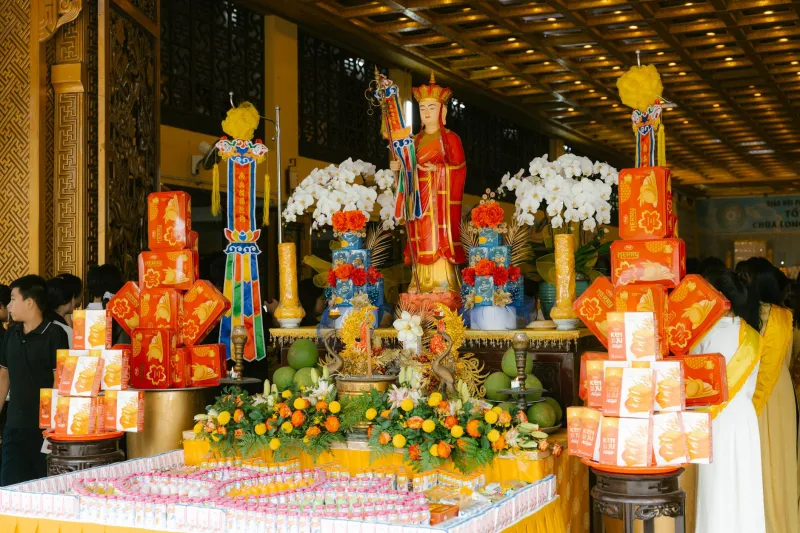
This one sits firmly in the cultural and spiritual category. Many Vietnamese households maintain a small altar where offerings of fruit, incense, and sometimes symbolic money are placed before significant events — including big gambling sessions. Asking for ancestral blessing is a deeply sincere act of faith, not a performance.
We're not here to debate theology. What we can say is that rituals that involve intention-setting, gratitude, and mindfulness have documented benefits in stress reduction and focused attention. Whether you're lighting incense or doing a five-minute meditation before sitting down to play blackjack, the outcome — a calmer, more present player — is the same.
Verdict: Spiritually personal, practically grounding. Respect the ritual for what it means to those who practice it.
The Ones That Are Just Pure Folklore
Let's be honest about a few that don't hold up even to casual scrutiny:
- Touching a bald man's head before betting — popular in some Southeast Asian gambling circles as a luck-bringer. No mechanism, no benefit, and probably not welcome by the bald man in question.
- Entering a casino left foot first — widely practiced, zero evidence of any effect whatsoever.
- Avoiding female dealers on certain nights — a dated, sexist superstition with no strategic or psychological backing. Skip this one entirely.
Superstitions that involve other people — especially those that reinforce bias or stereotype — are worth examining critically. The best Vietnamese gambling traditions are about personal discipline and mental preparation, not about projecting beliefs onto others.
What American Players Can Actually Take Away
The smartest thing American players can learn from Vietnamese gambling culture isn't any specific ritual. It's the attitude behind the rituals — the idea that your mental and emotional state before and during a session is something worth actively managing.
Pick your session times intentionally. Create a pre-game routine that calms you down and focuses you in. Use whatever symbolic anchors — a lucky hoodie, a specific playlist, a cup of strong coffee — help you feel sharp and in control. And know when to close the laptop and call it a night.
The Vietnamese players who've been doing this for generations aren't winning because the ancestors are watching over their bankrolls. They're winning — at least sometimes — because they treat gambling as a discipline, not just a pastime.
And that mindset? That travels just fine across any cultural border.